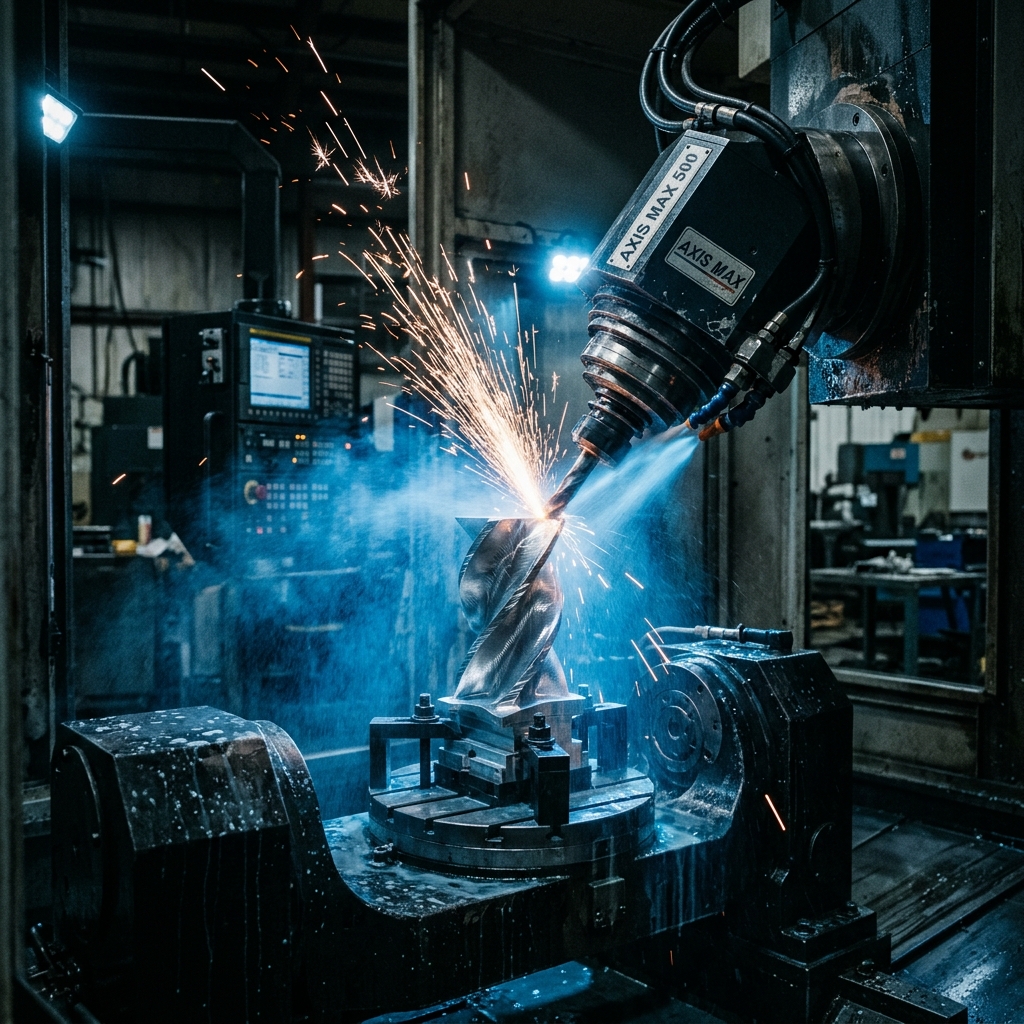
Bir uçak motorunun türbin kanadı, dakikada 15.000 devir dönerken 1.400°C sıcaklığa maruz kalır. Bu koşullarda çalışacak parçanın üretim toleransı ise insan saçından 20 kat incedir. ArcCut Systems, Ankara OSB'deki fabrikasında kurduğu 5 eksenli CNC işleme merkezleriyle bu toleransları tutarlı biçimde yakalayan Türkiye'nin önde gelen havacılık tedarikçilerinden biri. Teknik Direktör Oğuz Çetin ile konuştuk.
"5 eksenli işleme, parçaya istediğiniz açıdan ulaşmanızı sağlar. Ama gerçek sanat, sıcaklık değişiminin metalde yarattığı deformasyonu öngörmek ve bunu kompanzasyon olarak programa yazmaktır."
sanayi.tech: 3 eksenli ile 5 eksenli CNC arasındaki pratik fark nedir?
Oğuz Çetin / ArcCut Systems: 3 eksenli makinede kesici takım yalnızca X, Y ve Z doğrultusunda hareket eder. Karmaşık bir kanat profili işlemek için parçayı defalarca yeniden bağlamanız gerekir; her bağlama ise hata biriktirir. 5 eksenli makinede hem doğrusal hem de dönme hareketleri eş zamanlı gerçekleşir. Parçayı bir kez bağlar, tüm yüzeyleri işlersiniz. Tolerans birikimi ortadan kalkar. İşleme süresi %60 azalır. Bizim makinelerimizde ayrıca termal kompanzasyon sistemi var: makine gövdesi ısındıkça boyutsal sapma oluşur; sensörlerimiz bunu gerçek zamanlı ölçer ve takım yolunu otomatik olarak düzeltir.
sanayi.tech: TUSAŞ ve Roketsan gibi savunma firmalarına tedarik yapıyor musunuz?
Oğuz Çetin / ArcCut Systems: AS9100 Rev D havacılık kalite sertifikamız var; bu, büyük OEM'lere tedarik için ön şart. Savunma sanayiinde aktif tedarikçi konumundayız, ancak sözleşme gizlilik nedeniyle müşteri isimlerini paylaşamıyoruz. Genel olarak söyleyebilirim: Türk Hava Kuvvetleri envanterindeki bazı platformların gövde ve motor bileşenlerinde ArcCut işçiliği var.
sanayi.tech: Dijital ikiz uygulamalarını üretim sürecine nasıl entegre ettiniz?
Oğuz Çetin / ArcCut Systems: Her parça için işleme öncesinde simülasyon yapıyoruz. Takım yolu, malzeme özelliği ve kesme kuvveti verileriyle oluşturulan dijital ikiz, gerçek üretimden önce tahmini yüzey kalitesini ve boyutsal çıktıyı hesaplıyor. Bu sayede pahalı malzemede hurda oranımızı neredeyse sıfıra indirdik. İnconel ve titanyum gibi zor işlenen malzemelerde bu özellikle kritik çünkü hammadde bedeli çok yüksek.
An aircraft engine turbine blade rotates at 15,000 RPM while exposed to temperatures of 1,400°C. The manufacturing tolerance of the part that must operate under these conditions is twenty times thinner than a human hair. ArcCut Systems, with its 5-axis CNC machining centers at its Ankara OSB facility, is one of Turkey's leading aerospace suppliers that consistently achieves these tolerances. We spoke with Technical Director Oğuz Çetin.
"5-axis machining lets you approach a part from any angle. But the real art is anticipating the deformation that temperature changes cause in metal — and writing that as compensation into the program."
sanayi.tech: What is the practical difference between 3-axis and 5-axis CNC?
Oğuz Çetin / ArcCut Systems: On a 3-axis machine, the cutting tool moves only along the X, Y, and Z axes. To machine a complex blade profile, you need to re-fixture the part multiple times — and each re-fixturing accumulates error. On a 5-axis machine, both linear and rotational movements happen simultaneously. You fixture the part once and machine all surfaces. Tolerance accumulation is eliminated. Machining time is reduced by 60%. Our machines also have a thermal compensation system: as the machine body heats up, dimensional deviation occurs; our sensors measure this in real time and automatically correct the tool path.
sanayi.tech: Do you supply defense firms like TUSAŞ and Roketsan?
Oğuz Çetin / ArcCut Systems: We hold the AS9100 Rev D aerospace quality certification — a prerequisite for supplying major OEMs. We are an active supplier in the defense industry, though we cannot share client names due to contractual confidentiality. What I can say in general: ArcCut craftsmanship is present in the airframe and engine components of certain platforms in the Turkish Air Force inventory.
sanayi.tech: How have you integrated digital twin applications into your production process?
Oğuz Çetin / ArcCut Systems: We run a simulation for every part before machining. The digital twin — built from tool path, material property, and cutting force data — calculates estimated surface quality and dimensional output before actual production. This has reduced our scrap rate on expensive materials to near zero. This is especially critical for difficult-to-machine materials like Inconel and titanium, where raw material costs are very high.